

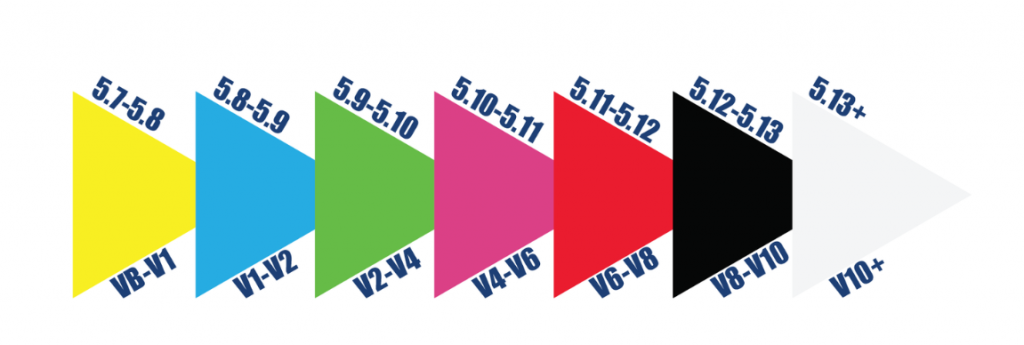
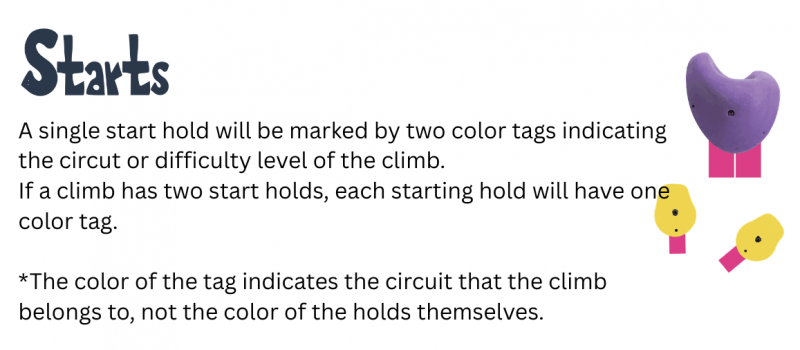
Instead of giving each climb a single V-grade, circuit grading groups climbs into grade ranges. For example, one circuit might span V2–4 rather than label something strictly “V3.” Each circuit is color-coded by start tag, not hold color, and the circuits intentionally overlap. That helps:
- Smooth your progression between levels
- Reduce the frustration of inconsistent V-grades
- Focus more on challenge and fun, less on chasing numbers
Grading is subjective, and this system embraces that.
Grading is subjective. Everyone’s body, style, and strengths are different, so assigning one exact number to a climb doesn’t always match how it feels for every climber. While we put a lot of effort into setting, we are still a small team, and that makes it even harder to grade consistently.
By grouping climbs into overlapping ranges instead of a single grade, circuit grading gives a broader picture of how a problem might feel for different bodies and skill levels. It takes the pressure off chasing grades, and helps you focus on exploring movement, trying new climbs, and enjoying progression in a way that fits you.
Climbing is just as much mental as it is physical. Too often, we skip climbs that look fun just because the grade makes us think we’re not “that level.” Circuit grading takes the pressure off the number and invites you to try climbs based on curiosity, not identity. See something cool? Give it a shot.
Nothing…except they’re subjective, and easy to get weird about. A lot of people climb harder or weaker than their “grade” depending on style, height, reach, experience, or even what they had for breakfast. Circuit grading reflects that complexity and makes room for everyone.
Because we’re a small gym, and using tag color gives us the freedom to mix holds between the grades which means less waste, more creativity, and more flexibility with our hold budget.
By letting go of number-chasing and focusing on movement. You’ll naturally challenge yourself, project more problems, and explore different styles. We hope.
We’ve always taken inspiration from the outdoors, and that’s why the grading here has always been on the stiffer side. Climbing outside is hard, and we’ve tried to reflect that. Even if you never plan to get on real rock, there’s still something cool about holding onto that ethos indoors.
Circuit grading has roots in Fontainebleau, France, a place where people have been bouldering for over a century. It’s less about numbers and more about movement. That’s the vibe we’re after.
Read up on the history of circuit grading at The Font.
Inspired by History
We’ve always taken inspiration from the outdoors, and that’s why the grading here has always been on the stiffer side. Climbing outside is hard, and we’ve tried to reflect that. Even if you never plan to get on real rock, there’s still something cool about holding onto that ethos indoors.
Circuit grading has roots in Fontainebleau, France, a place where people have been bouldering for over a century. It’s less about numbers and more about movement. That’s the vibe we’re after.
Read up on the history of circuit grading at The Font.
Other Exciting Updates
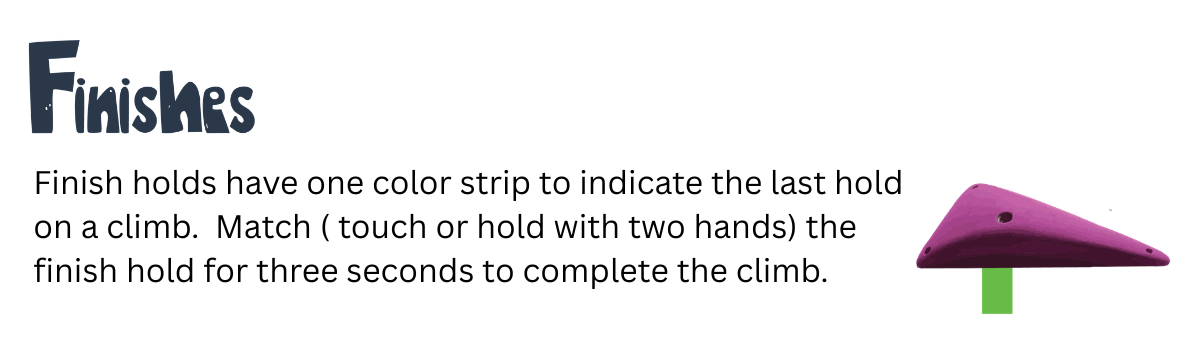
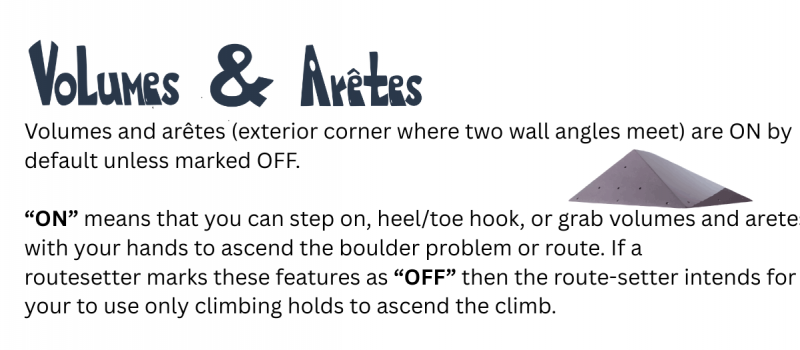
We’re using this transition as an opportunity to make a few tweaks we’ve been interested in for a while. We’re also introducing a few improvements that work with circuit grading to make routes easier to read and interact with:
Why?
Grading is subjective. Everyone’s body, style, and strengths are different, so assigning one exact number to a climb doesn’t always match how it feels for every climber. While we put a lot of effort into setting, we are still a small team, and that makes it even harder to grade consistently.
By grouping climbs into overlapping ranges instead of a single grade, circuit grading gives a broader picture of how a problem might feel for different bodies and skill levels. It takes the pressure off chasing grades, and helps you focus on exploring movement, trying new climbs, and enjoying progression in a way that fits you.
More Reasons We’re Psyched
Climbing is just as much mental as it is physical. Too often, we skip climbs that look fun just because the grade makes us think we’re not “that level.” Circuit grading takes the pressure off the number and invites you to try climbs based on curiosity, not identity. See something cool? Give it a shot.
Tips for Navigating the New System
Warm‑up: Start in the lower circuits and explore problems you find interesting.
Project: Look at adjacent circuits for climbs that challenge you in new ways.
Explore beyond your “usual” color: The circuit system is designed to help you grow.
Ask questions: we’d love to help you find the right problems for you!